I just listened to two albums by Seamus Egan back to back: When Juniper Sleeps and Early Bright. The former is from 1996 and the latter was released in 2019.
The difference between the two works is remarkable. Incidentally or not, the time that separates the two albums is almost exactly the timeframe of the active years of Solas, the legendary Irish-American band that he was a crucial player in.
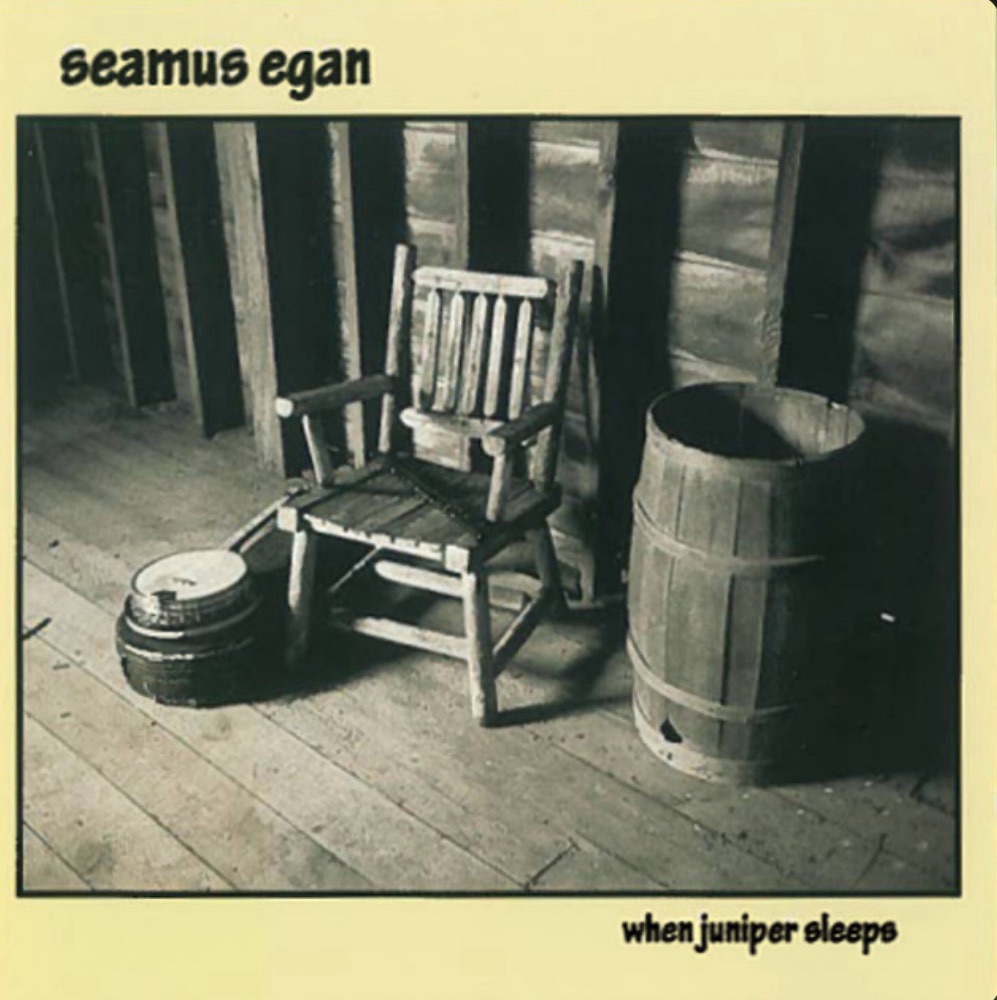
It’s interesting to note that Juniper was released the same year as the debut album by Solas – interesting because it’s so profoundly different from the music Solas was making at the time.
Juniper has a lot of electric instruments and for the most part features a full band with drums, electric bass, synthesizers, and so on. It’s a full-fledged attempt to bring folk music kind of up-to-date with the 1990s, and in my opinion it’s a very successful one at that. I noticed that the critic at allmusic.com did not like the production and thought it was too slick. I kind of get that, but on the other hand, I think it works very well and also leaves room for the acoustic wizardry of Seamus Egan and also John Doyle on the acoustic guitar.
The tunes are so varied that the album feels a bit like a buffet table or a smorgasboard, but I don’t really care. The tunes are great, the more traditional tunes work beautifully, and when the band gets electric and a bit funky in the style of Bad Haggis – what a great band they were! – it’s really enjoyable.
Worth noting is also the fact that on a couple of tunes, the band sounds surprisingly close to the Pat Metheny Group. There is a very Lyle Mays kind of piano passage on Mick O’Connors and a very, very Metheny-sounding guitar solo on Along the Way – I had to check if it wasn’t Pat himself guesting on the track (it wasn’t). I see these nods to fusion jazz as an indication of Egan’s attempt to create a more modern or contemporary incarnation of trad based music.
The more quiet pieces are also really, really beautiful and I don’t mind if they are sometimes a bit Hollywood-y, perfect music for an emotionally loaded crowd pleaser.
But if Juniper displays signs of seeking for direction and a lack of clear artistic statement, Early Bright is fully and firmly a work of a very mature and self-assured artist.

I think it’s a completely acoustic album with a rich and lively soundscape. Most of the tunes are firmly grounded in Irish and/or American folk music but processed through Egan’s own personal vision.
Some pieces are stylistically pretty much trad while others take more liberties and extend the style to integrate elements of jazz and perhaps something I might call progressive folk music, with odd time signatures and stuff like that.
But it’s never complicated or complex – or at least it never sounds like it. Even when playing in uneven times, his ensemble do it in such a natural way that you don’t even realize the tune is in five, just like you don’t necessarily notice that the song Seven Days, by Sting, is in five-eight throughout.
Unlike Juniper, Early Bright is a very coherent work and the dynamic between the tunes makes it flow beautifully throughout. I love both the more energetic pieces like 6 Then 5 or B Bump Bounce, and the lyrical, elegiac works like Everything Always Was and the absolutely charming closing tune Under the Chestnut Tree.
What I find particularly fascinating is the way the maturation and finding his own musical voice is so clearly in evidence, when you compare the two albums separated by 23 years. I love both: Juniper, for it’s eagerness to find new ways of expressing an older tradition, Early Bright for giving us a personal, meaningful, very human musical vision.

 FolkNotes