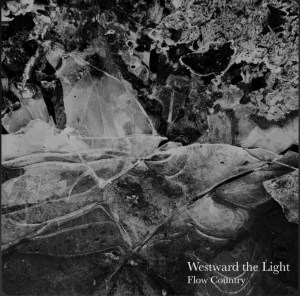
Before I will go to the actual review of this excellent album, a note on the radio silence that has been evident on this blog for quite some time.
As I wrote briefly in my previous posting, I have been living with the return of my tinnitus this spring and early summer. In my case, the symptoms are caused not by hearing damage but the strange physiology of my hearing apparatus. Even if I am aware that the symptoms are not an indication of anything serious, they do distract me and enjoying music becomes impossible.
But, as my tinnitus is want to do, it stayed with me for a time until my brain decided it’s time to end this nonsense. I hope it will stay away – or at least be much reduced – and not come back for a very, very long time. I am now only happy that I can be back in music, listening and thinking and writing and living it. And now we return to our scheduled programming. Thank you and sorry for the interruption.
I openly confess that when the debut album by Westward The Light was released a few years ago, I did not get into it fully. I thought it was an admirable achievement, but for some reason it felt somewhat distant to me. Go figure.
When Flow Country was released this spring, almost the same thing happened. I listened to it once, turned to something else, but soon enough came back to the album. There was something there this time that intrigued me and made me feel I had lost out on something on my first listen. So I decided to sit down, take some time, and pay attention.
After that, I listened to Flow Country maybe three, four, maybe five times without listening to anything else in between. I did that, because the music on this album is so finely arranged and layered, it simply will not yield its riches at one listening.
This is not to say that it’s an example of folk music trying to emulate classical music and its intricacies and complexities. It just happens to be music, played and arranged by extremely talented people who are brilliant and brave enough to take the heritage, and make it their own in a very positive and constructive way.
Take the opening, The Rearrangement Reels. It begins with an acoustic guitar, laying down the pulse, and the piano, then the fiddle, presenting the main themes or riffs of the piece. After that, the melody lines do not change that much, but everything else does. The band goes through, in what I think are three segments, different dynamics, moods, and rhythmic expressions.
It’s not classical music, but it’s not far removed from a fugue or sonata form, with the theme or themes examined and processed through shifting musical angles. And all this in less than five minutes. And done in such a way that if you do not pay attention, you will most likely miss the most of what’s going on .
I am not exactly surprised at this, as the musicians in the band have all proven their abilities many times over. Sally Simpson, Charlie Grey and Joseph Peach are fabulous musicians who have all touched upon ambitious musical horizons in their various earlier projects. Owen Sinclair on the guitar is solid and provides the critical rhythm element to the proceedings.
And that’s just for starters. As the album proceeds, we encounter different strengths of Westward the Light. The title track, by Joseph Peach, is a deceptively simple tune in 3/4 time, gentle and slightly melancholy.
O’Farrell’s, a traditional tune, is given a very WTL treatment, with slow tempo and lots of glissando in the fiddles, feeling like a soundtrack to a hot summer afternoon.
Sally Simpson’s composition Good Days continues in the cinematic vein, with the happy melody in the first part played against a subdued murmur, like an uncertain memory, before transforming into a faster reel halfway through, yet retaining the sense that those good days are indeed a memory and not present (at least that’s how it makes me feel).
And Castle Coeffin, a set credited to Charlie Grey and the good ol’ Trad., opens with a majestic melody – again invoking something very visual – before it segues into a grooving second theme that eventually fades like the sun setting behind the old castle.
The traditional The Braes of Rannoch closes the album with elegiac, understated elegance and spirit. As the last remnants of sound vanish, there is a sense of closure, nothing needs to be added after this.
Flow Country is not only an immensely enjoyable work. It comes with a clear and solidly realized vision that respects the Celtic tradition while painting an original layer on top of it. Superior music, all of it.

 FolkNotes