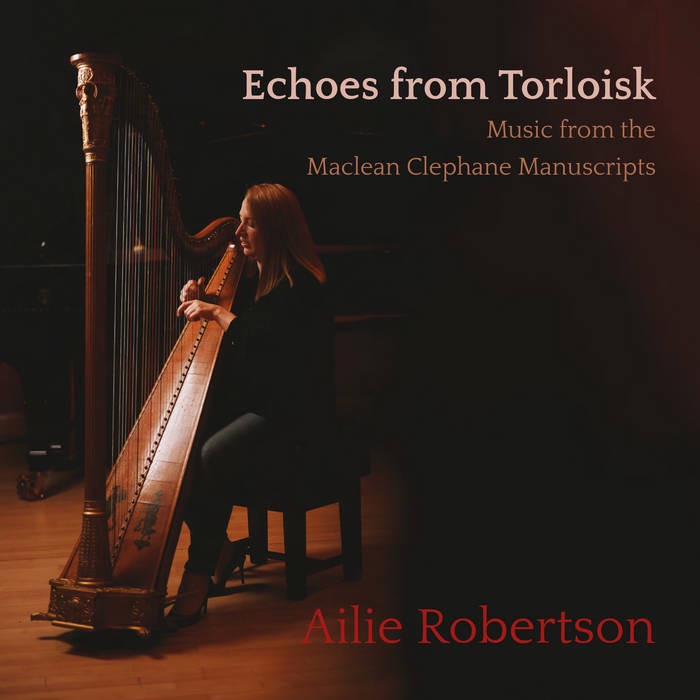
Music diary, March 11, 2026
I got into Celtic music in late 2016 and I don’t think I had ever heard the Celtic Harp before I heard Ailie Robertson’s then new album Traditional Spirits. That one she did with many leading Scottish folk musicians and I absolutely loved it from the word go, it was one of the albums that really drove me into this music madness I have inhabited for almost a decade now.
She doesn’t release albums too often; she teaches and composes and plays with the excellent The Outside Track. So I was happy to put on my better headphones and dive into this one. And as it turned out, this one is a very special case in many ways.
What this album is about is explained concisely on the World Music Central web site:
The Maclean Clephane manuscripts were compiled by sisters Anna-Jane and Margaret Maclean Clephane at Torloisk House on the Isle of Mull. The work dates from about 1808 to 1825.
The manuscripts remained unpublished for more than 200 years. They offer a rare view of music traditions in early 19th-century Scotland. They also point to older Scottish and Irish harp repertory.
Robertson selected 21 tunes from the collection. She arranged them for a modern recording. The release brings the Torloisk material to new listeners and highlights a little-known chapter of Scotland’s cultural history.
So now you know. Ailie gives more facts on this project on her Bandcamp and personal websites, but this brief explanation is enough for now.
Echoes from Torloisk is an important and musically extremely satisfying experience, at least it is for me. Its cultural and historical importance is undeniable and needs no further arguments. As for the music, things are always subjective, but I find this absolutely lovely and healing, and also an amazing display of her brilliance as a musician.
The 18 tracks are mostly solo harp performances of her arrangements of the 19th century notations. On four of the tracks, she is joined by guitarist Miguel Girão, by now a familiar name to many Scottish folk music fans and Celtic Connections visitors.
So, it’s all acoustic and played on instruments that are not my nature loud. And yet, this music carries a significant charge.
It is timeless, even when it comes to us from centuries ago; it communicates to us in this time, and to me in another country and another culture. There are connections to Western classical music and Renaissance music; it’s an example of what I like to call chamber folk or chamber Celtic. But at its heart, it is old Celtic folk music from Scotland and Ireland, preserved, kept vibrant and carried on by many generations, all the way up to 2026.
Some of the tunes on this album feature the entire range and power of the Celtic harp. Others, particularly the ten short ports (“originally a common-time lesson or an air written for the harp, akin to a planxty“, from Tunearch.org), are more sparse. I find the ports particularly fascinating: in their quiet but intense focus and the meaningful silence surrounding the music, they remind me of East Asian music, such as played on the Koto and similar harp-like instruments.
Regardless of the tempo or the mood of the individual pieces, each and every one of them grabs your attention and the album as a whole creates a very special atmosphere that I find hard to describe. It is at once gentle and airy, yes, but also somehow… electrifying and intense. I know that sounds paradoxical, but there you have it. It’s music that’s there. I’m afraid I can’t put it any better.
I can, unfortunately, imagine someone playing this in the background as musical wallpaper, and that would be close to a criminal act because there is so much here that’s rich and emotional and captivating in all its detail, not to mention Ailie’s masterful playing.
This is an important record, for the historical and cultural value and for the music and her performance. Do not pass, please.

 FolkNotes